About
Our History
Over 100 years of championship coastal golf.
EST. 1922
A Century on the Channel
For more than a century, Kingston Beach Golf Club has been woven into the fabric of southern Tasmanian life. Golf was first played above the beach in 1910, and from the vision of Robert Nettlefold the club itself was founded in 1922. From the Nettlefolds and the Toogoods to today's community of more than 750 members, Kingston Beach has always blended championship golf with the warmth and character that make this club special.
1910
Early Beginnings
Golf in Kingston is older than the club itself. The Kingston Golf Club was formed on 22 September 1910, with links laid out above the cliffs at the southern end of Kingston Beach, on the Mount Royal and Boronia properties, stretching to the blowhole at Blackmans Bay. These links are the first recorded golf played in the municipality.
The early club ceased operations around the First World War, and organised golf in the district paused with it.
After the War
The Nettlefold Vision
After the war, Isaac Robert Nettlefold, a passionate sportsman and prominent landowner and businessman, set about reviving golf in Kingston. On his property Wharncliffe, on the western side of the Channel Highway, he laid out informal holes for family and friends, and organised matches against the Hobart Golf Club, later to become Royal Hobart.
In 1920 he purchased The Bond Farm and additional bushland along Browns River, intending a residential subdivision built around a nine-hole course. The subdivision never proceeded, but the land became the foundation of Kingston Beach Golf Club. Nettlefold was elected a Life Member of the Royal and Ancient Golf Club of St Andrews in 1935, and in 1945 became the first Life Member of this club.
1922-1923
The Club is Born
On 23 November 1922 the company Kingston Beach Golf Links Pty Ltd was formally established, and it was agreed the club would be known as Kingston Beach Golf Club.
The original nine holes were laid out by Robert Nettlefold with John Irving, professional at the Launceston Golf Club, and built under the eye of W. J. Eames, the club's first greenkeeper and professional. The modest cottage that served as both clubhouse and Eames' residence still stands behind today's 4th green. The course was officially opened on 27 January 1923 by the club president, Dr R. G. Scott.
1924-1946
Growing the Course
Demand grew quickly. The course expanded to 12 holes in 1924, taking in the land now occupied by the 2nd and 3rd, and a full 18 holes were in play by 1926.
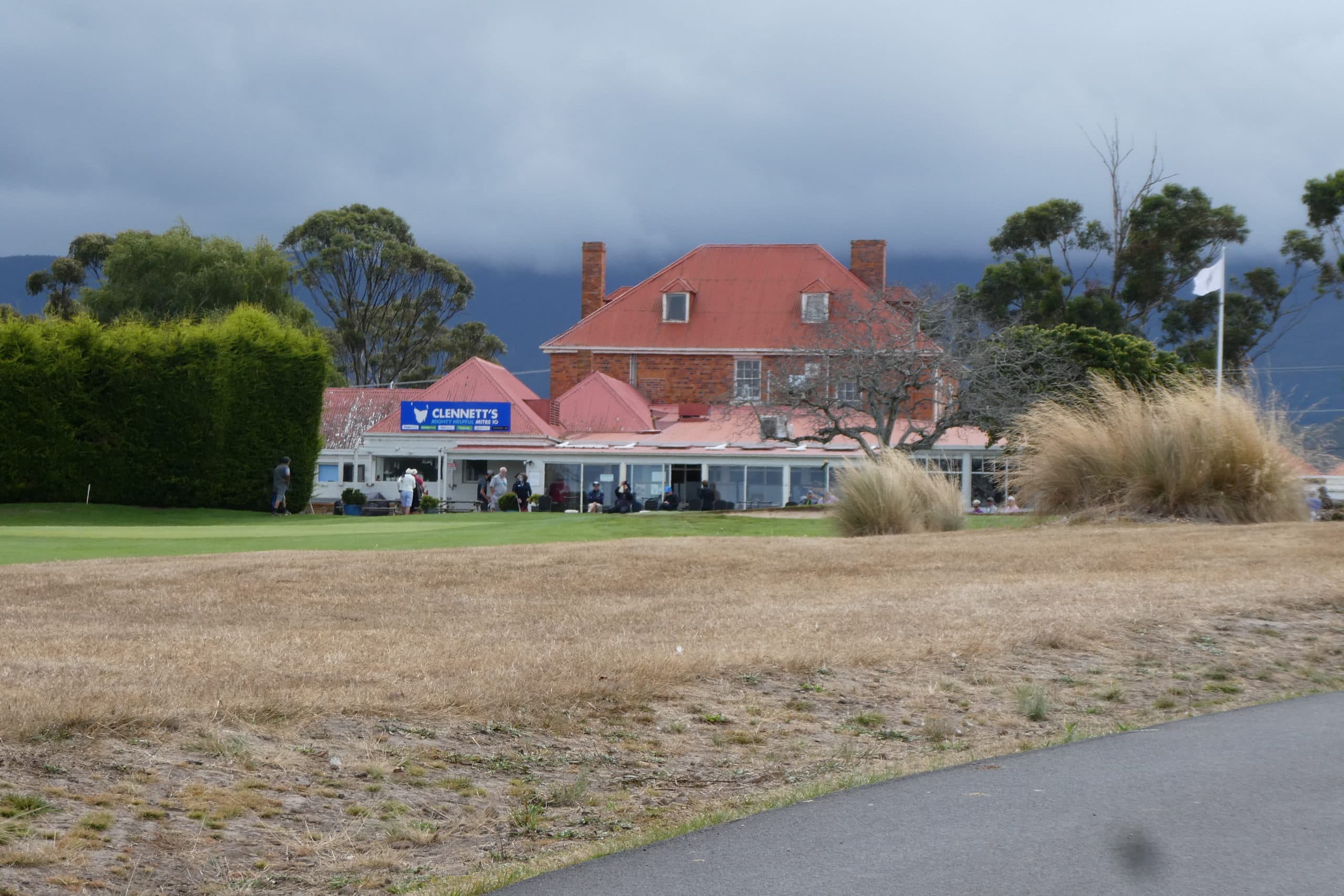
In 1925 the clubhouse made the journey up the hill to the Red-House, opened on 7 March that year and described by The Mercury as “the most up-to-date clubhouse in the State”. In 1946 the club finalised the purchase of land on the north-western side of Browns River, allowing the extension of the 11th and 12th holes.
1926-1935
The Robertson Era
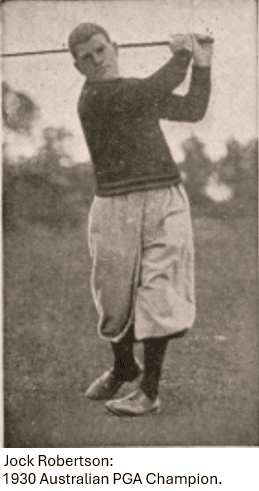
Jock Robertson was appointed club professional and greenkeeper in 1926. He designed the course's bunkering, and under Robert Nettlefold's direction established a dedicated nine-hole junior course nearby.
Robertson was a formidable player. He won the Summer Cup three times, including the inaugural event in 1928 - a tournament believed to be the longest continuously running open 36-hole event in Australia. His greatest triumph came in 1930, when he won the Australian Professional Championship at Metropolitan Golf Club, defeating inaugural champion Rufus Stewart 2&1. Before leaving the club in 1935, he donated his championship trophy to Kingston Beach.
1924-1947
Len Nettlefold, the Great Left-Hander
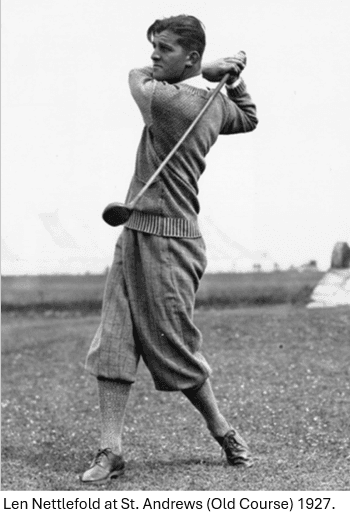
Robert's son Len Nettlefold CBE became one of Australia's greatest amateur golfers. He won two Australian Amateur Championships (1926 and 1928), eight Tasmanian Amateur titles and eight Tasmanian Opens.
In the first round of the 1927 Open Championship he equalled the amateur course record of 71 on the Old Course at St Andrews, a score bettered that round only by Bobby Jones. He captained the Australian team that toured Britain in 1938, and was hailed abroad as “the world's finest left-hand player”. Len was inducted into the Tasmanian Sporting Hall of Fame and holds Legend status in the Tasmanian Golf Hall of Fame.
1936 Onwards
The Toogood Era
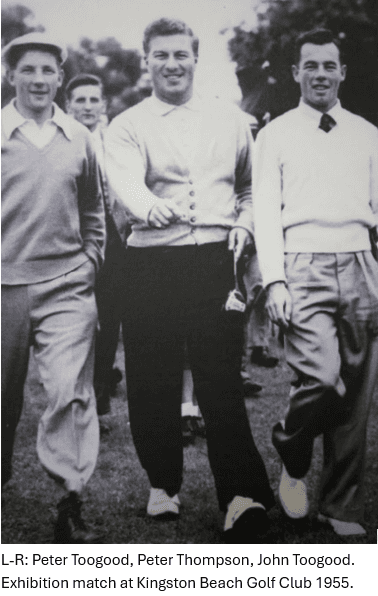
When Alf Toogood became club professional in 1936, he began a family dynasty. His son John Toogood OAM won tournaments across six decades, his name appearing on the club's honour boards from 1951 to 2011. With Jenny McMeekin he later devoted years to junior golf across Tasmania, and both were awarded Life Membership.
Peter Toogood MBE AM first made headlines on 30 January 1939 when, at just eight years of age, he holed in one on the 7th - entering the Guinness Book of Records as the youngest player ever to do so, a record that stood for 20 years. He went on to win the 1954 Australian Amateur, ten Tasmanian Amateur titles, eight Tasmanian Opens and the New Zealand Amateur, was leading amateur at the 1954 British Open, and was a member of the winning 1958 Eisenhower Trophy team. In the 1954 Australian Amateur final at Royal Adelaide he defeated his brother John 5&4, inspiring the famous headline: “Toogood Was Too Good For Toogood”.
“Toogood Was Too Good For Toogood.”
The famous headline, 1954 Australian Amateur final, Royal Adelaide
Summer Fridays
The Chicken-Run
For decades, daylight saving Fridays meant the Chicken-Run: a rolling-start Stableford from 2pm over a reduced 12-hole layout, holes 1 to 8 and 15 to 18 for the run home.
From 1984 the event was run by husband-and-wife duo Don and Jan Stranger, with entry at $2 for members and $5 for visitors, and fields regularly topping 120 players. Afterwards the clubhouse buzzed - a cook-your-own BBQ, a well-stocked salad bar, the chance to win a bottle of wine or that elusive chook, and juniors deep in chipping and putting contests, imagining a putt to win the US Masters.
Honour Roll
Champions of Kingston Beach
The annals of Tasmanian golf are littered with Kingston Beach alumni. Multiple state champions have represented the club, among them Lillias Barclay, Len Nettlefold, Enid Reid, Betty Perry, Betty Sale, Alf Toogood, Jack Willing, Peter Toogood, John Toogood, Bradley Bone and Laura Richards. The men's Division 1 pennant team went undefeated in the Southern Pennant competition from 1938 to 1954.
The club also became a stage for exhibition matches featuring some of the game's greatest names - Peter Thompson, Joe Kirkwood, Norman Von Nida, Bobby Locke, Lloyd Mangrum and the legendary RAF pilot Douglas “Tin-Legs” Bader all played here before large crowds.
Club history researched and compiled by Bradley Bone, with thanks.
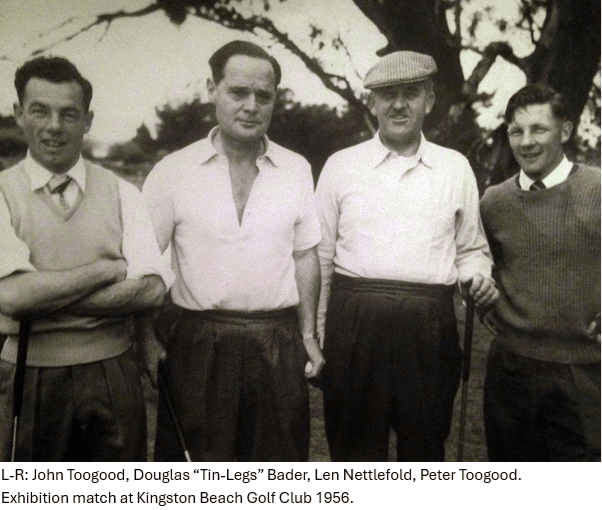
John Toogood, Douglas “Tin-Legs” Bader, Len Nettlefold and Peter Toogood at a 1956 exhibition match at Kingston Beach Golf Club
Timeline
Milestones
1910
Golf Comes to Kingston
The Kingston Golf Club is formed on 22 September 1910, with links above the cliffs at the southern end of Kingston Beach. It is the first recorded golf in the municipality, ceasing around the First World War.
1922
The Club is Founded
Kingston Beach Golf Links Pty Ltd is established on 23 November 1922, on land assembled by Robert Nettlefold along Browns River, and the club takes the name Kingston Beach Golf Club.
1923
Official Opening
The course officially opens on 27 January 1923, its first nine holes laid out by Robert Nettlefold and John Irving. W. J. Eames serves as the club's first greenkeeper and professional.
1926
Eighteen Holes
The course grows from 9 holes to 12 in 1924 and to a full 18 by 1926. A year earlier the clubhouse moved up the hill to the Red-House, hailed by The Mercury as the most up-to-date clubhouse in the State.
1930
A National Champion
Club professional Jock Robertson wins the Australian Professional Championship at Metropolitan Golf Club. Before leaving the club he donates the trophy to Kingston Beach.
1939
The Youngest Ace
Eight-year-old Peter Toogood holes in one on the 7th, entering the Guinness Book of Records as the youngest player ever to ace a hole. The record stands for 20 years.
1954
Toogood Too Good
Peter Toogood defeats his brother John in the final of the Australian Amateur Championship at Royal Adelaide, inspiring the famous headline: Toogood Was Too Good For Toogood.
2022
100 Years of Golf
Kingston Beach Golf Club celebrates its centenary. One hundred years of championship golf on the Tasmanian Channel, a milestone few clubs achieve.
Today
Into the Next Century
With more than 750 members, a refreshed identity, and a new era of investment in the club's digital presence, Kingston Beach looks to its second century with ambition.
Est. 1922 — Between the Mountain and the Sea
A hundred years on. So are the views.